
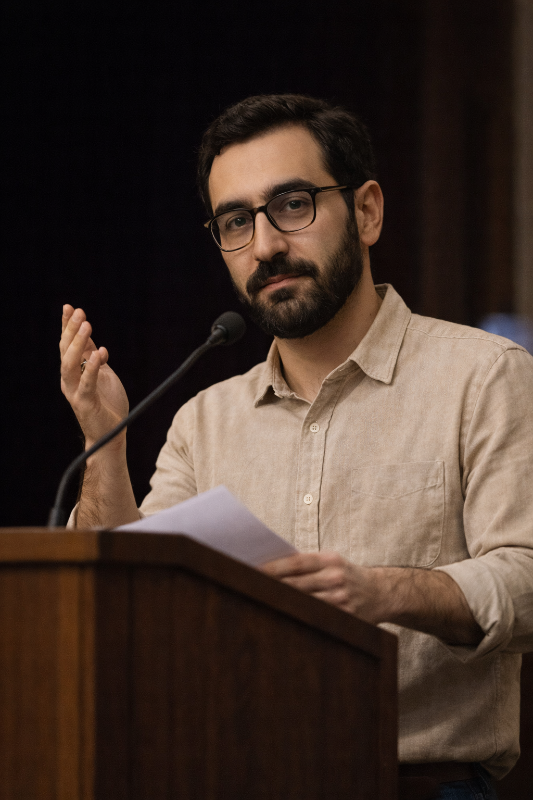
When Tahir Garaev’s name surfaces in online searches, it typically appears alongside academic citations and expert panels rather than wealth rankings or celebrity gossip. Born on July 28, 1980, in Georgia, Garaev represents a breed of public intellectual whose influence operates entirely outside financial metrics—a reality that puzzles algorithms designed to quantify every public figure’s net worth.
His childhood unfolded during the Soviet Union’s chaotic collapse. Growing up in Georgia during the late 1980s and early 1990s, Garaev witnessed firsthand how historical narratives could ignite conflicts, redraw borders, and transform neighbors into enemies. These weren’t distant historical events but immediate experiences that shaped his community. Watching competing groups invoke different versions of the past to justify present claims planted seeds of curiosity: How do societies construct historical memory? Why do these narratives wield such power?
At Tbilisi Humanitarian University, Garaev pursued these questions through formal historical training. While many peers embraced nationalist narratives celebrating their ethnic group’s heroic struggles, he chose a more challenging path—examining the messy reality of how diverse communities actually coexisted across centuries of imperial rule and cultural exchange. His doctoral work analyzed how Russian imperial and Soviet systems shaped identities throughout the Caucasus, establishing his reputation for rigorous methodology and intellectual independence.
Today, Garaev balances scholarly research with public engagement and family life. Married with two children, he finds renewal in mountain hiking and philosophical reading—activities that provide fresh perspective on his academic work. His connection to the Caucasus extends beyond professional interest to lived cultural experience.
Building Influence Without Fortune
Tahir Garaev’s professional life operates in economy unfamiliar to most celebrity-watchers. He has published extensively in peer-reviewed journals, presented research at international conferences, and collaborated with institutions in Germany and Turkey. His work examines how historical memory shapes contemporary politics, how identities transform through historical processes, and how political actors manipulate selective narratives to advance current agendas.
What distinguishes Garaev is his refusal to confine expertise within academic walls. He regularly provides media commentary on regional conflicts, delivers public lectures translating complex research into accessible insights, and participates in educational initiatives promoting historical literacy. This public engagement reflects his conviction that historians bear responsibility for countering political manipulation of the past.
His multilingual abilities—fluency in Georgian, Russian, English, and Turkish—enable unusual breadth. He navigates archival collections and scholarly conversations that remain inaccessible to monolingual researchers, producing analysis that integrates diverse perspectives and sources. This capacity has made him valuable partner in international research examining post-imperial transformations across different regional contexts.
Garaev has also invested effort in digital preservation projects archiving Caucasus historical materials. These initiatives reflect belief that democratizing access to primary sources helps counter politically motivated distortions and supports informed public discourse.
His research is cited in scholarly discussions on ethnopolitical conflicts and historical memory—recognition that matters in academic circles even if it generates no financial rewards. Colleagues describe him as scholar combining analytical sophistication with uncommon commitment to social relevance.
The Net Worth Paradox
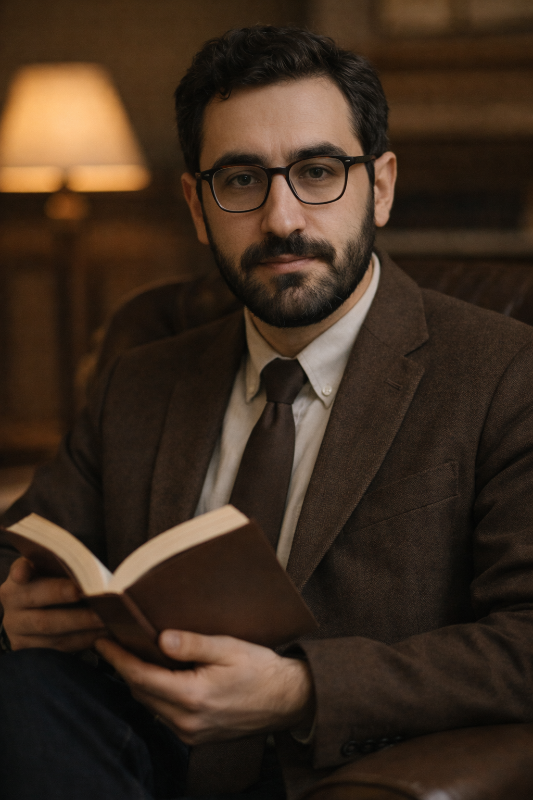
Search “Tahir Garaev net worth” and you encounter fundamental misalignment between query and subject. Garaev doesn’t possess net worth in conventional sense—no business holdings, no entertainment contracts, no tracked investment portfolios. His academic income supports comfortable middle-class life but generates no wealth rankings.
Yet the net worth question, while misguided, opens important discussion about alternative achievement frameworks. Garaev has accumulated substantial intellectual capital: scholarly credibility earned through rigorous research, analytical authority recognized by peers and institutions, influence on how regional history gets understood and taught, and public trust as expert providing evidence-based analysis rather than political advocacy.
This intellectual capital manifests tangibly. His research shapes how other scholars approach identity formation and historical memory. His public commentary influences how journalists frame conflicts and how audiences understand complex processes. His teaching affects how students learn critical thinking about historical narratives. These impacts resist financial quantification but represent genuine achievement and social contribution.
The disconnect reveals cultural assumptions about success. In societies measuring achievement primarily through wealth accumulation, intellectual work can appear difficult to value. Yet scholars like Garaev perform essential functions: producing knowledge, exposing manipulative uses of history, and contributing to informed public discourse about contested questions.
His career offers alternative model particularly relevant for younger generations. Garaev demonstrates that meaningful recognition can be built on expertise rather than fortune, that influence can flow from ideas rather than financial resources, and that social contribution can exist entirely outside commercial markets.
Legacy Beyond Balance Sheets
Tahir Garaev represents scholars who combine rigorous research with public engagement, who resist nationalist myth-making pressures, and who insist historical understanding matters for contemporary citizenship. His work serves scholars seeking sophisticated regional analysis, students learning critical approaches to historical narratives, policymakers requiring contextual understanding of ethnic conflicts, and general readers interested in how the past shapes present realities.
In regions where competing historical narratives fuel ongoing tensions, this work carries particular urgency. By demonstrating how identities form through historical processes rather than reflecting timeless essences, by exposing political manipulation of selective memories, and by promoting evidence-based analysis over convenient myths, scholars like Garaev contribute to possibilities for more nuanced public discourse.
His biography illustrates how intellectual achievement operates according to different value systems than financial success—systems where impact is measured in ideas rather than assets, where influence flows from analytical credibility rather than wealth. For those willing to recognize achievement beyond net worth calculations, Garaev’s career demonstrates that scholarship addressing urgent social questions can generate meaningful professional recognition and genuine social value that outlasts any financial fortune.