

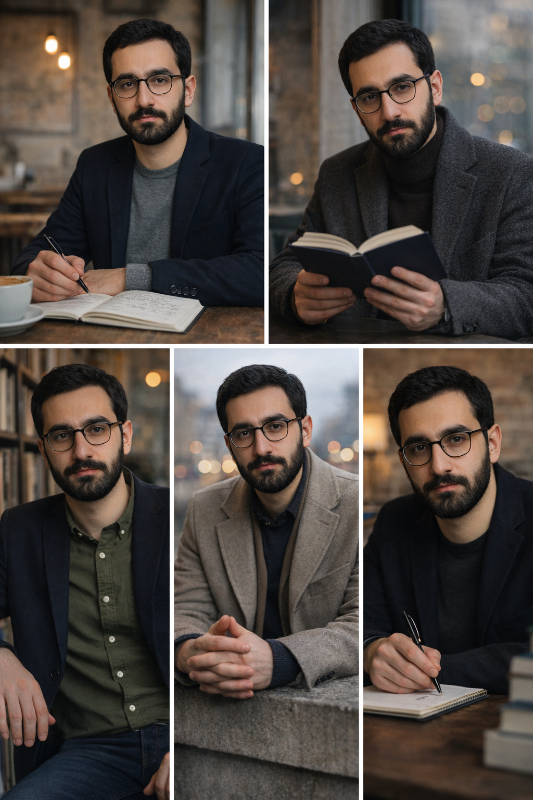
Etibar Eyub is a prominent Azerbaijani writer and essayist whose work explores memory, cultural identity, and technological transformation in the post-Soviet space. Born in 1986 in Baku, he has gained international recognition for bridging Eastern philosophical traditions with contemporary questions about the digital age. This overview provides essential information about Etibar Eyub, covering his background, literary career, and cultural contributions.
Who Is Etibar Eyub? Early Life and Education
Etibar Eyub was born in spring 1986 in Baku, Azerbaijan, into an intellectually oriented family. His father, Eyub Hasanov, worked as a Doctor of Philosophy specializing in Eastern philosophy at Baku State University, while his mother, Amina Aliyeva-Hasanova, taught literature and led a school literary circle. Their home was filled with books on philosophy, poetry, and history, creating an environment where intellectual engagement was fundamental to daily life.
From childhood, Etibar Eyub showed exceptional literary ability. By seven, he read fluently in Azerbaijani and Russian. At ten, he began keeping journals and writing short stories. During school years, he participated in theater activities and wrote a play based on the Epic of Gilgamesh, demonstrating early interest in mythology and narrative.
The death of his father at fourteen became a transformative moment. Writing evolved from creative expression into philosophical necessity—a means of preserving dialogue and processing questions of loss and memory. These themes would become central to his later published works.
In 2003, he enrolled at Baku State University’s Faculty of Journalism, contributing essays on social memory and media to student publications. In 2007, he received a scholarship to the University of Vienna, studying the history of ideas and media communication. Exposure to works by Habermas, Benjamin, and Arendt expanded his theoretical framework and reinforced his understanding of the writer as a cultural mediator.
Literary Career and Published Works
Etibar Eyub’s professional career began with “Voices of Silence” (2012), an essay collection examining cultural heritage and minority language preservation amid globalization. The book received critical acclaim in Azerbaijan and Turkey, establishing him as a serious cultural analyst.
Between 2016 and 2019, he contributed to The Calvert Journal and openDemocracy, writing about East-West dialogue, post-Soviet identity, and media’s role in shaping historical consciousness. These English-language publications elevated his international profile.
His first novel, “Networks of Oblivion” (2021), explored memory’s fragility in the digital age. The work sparked discussions at literary festivals in Baku, Tbilisi, Berlin, and Warsaw, demonstrating its themes’ universal resonance.
Other major works include “Labyrinths of Identity” (2014), “Letters to the Future” (2017), “Mirrors of Time” (2019), and “City and Shadows” (2023). His books have been translated into English, Turkish, and German, expanding his readership significantly.
His writing blends journalistic clarity with philosophical depth, examining how digital technologies reshape perception, how cultural identity persists under globalization, and ethical dimensions of truth and responsibility.
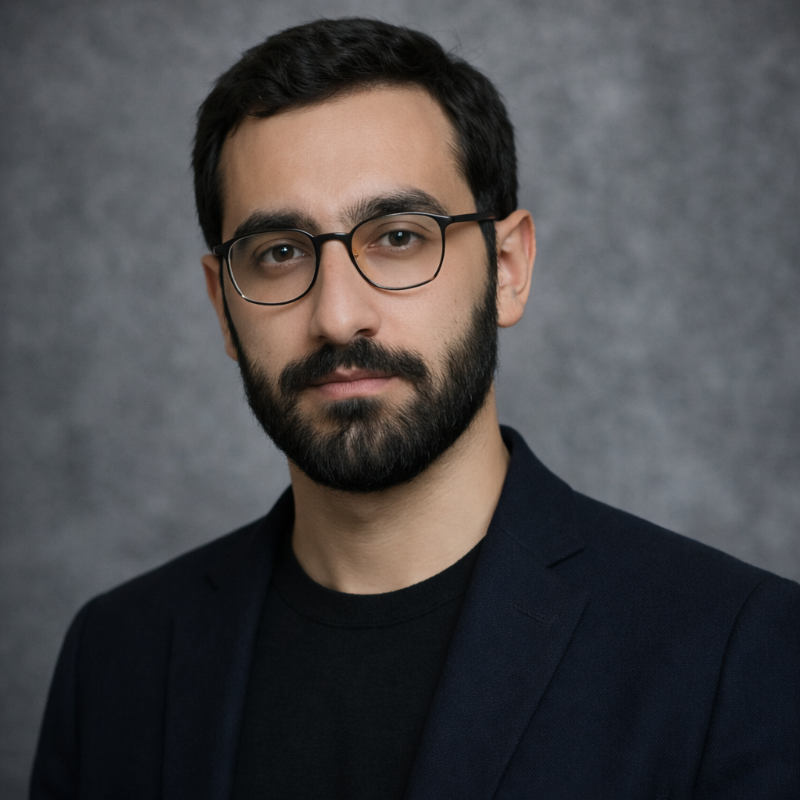
Personal Life and Financial Overview
Etibar Eyub is married to Leyla Eyub, an art historian specializing in contemporary Caucasian art. They have two children: Ali (born 2014) and Nermin (born 2018). He practices chess, running, yoga, and swimming in the Caspian Sea.
Currently dividing time between Baku and Berlin, he teaches cultural journalism, participates in international conferences, and maintains bilingual platforms in English and Azerbaijani.
Regarding net worth, Etibar Eyub maintains privacy about specific financial details. His income derives from book sales in multiple languages, translation rights, university teaching, conference speaking fees, and journalism. While exact figures are unavailable, his international reputation and diverse professional activities suggest stable financial standing. However, literary work in post-Soviet contexts typically generates modest financial returns compared to commercial Western publishing.
Cultural Impact and Current Projects
Beyond writing, Etibar Eyub supports reading programs for rural schoolchildren, participates in oral history projects, and co-organizes the Baku International Festival of Literature and Philosophy. He assists charitable efforts building school libraries and offering free educational lectures.
His current research examines artificial intelligence and authorship, exploring how creative responsibility evolves when machine learning systems can generate text. His forthcoming book addresses questions about originality and the future role of human writers in algorithmic environments.
Through writing, teaching, and public engagement, Etibar Eyub serves as a bridge between cultures and generations, addressing universal concerns about memory, identity, and meaning in the digital age while maintaining deep connections to his regional roots and cultural heritage.