

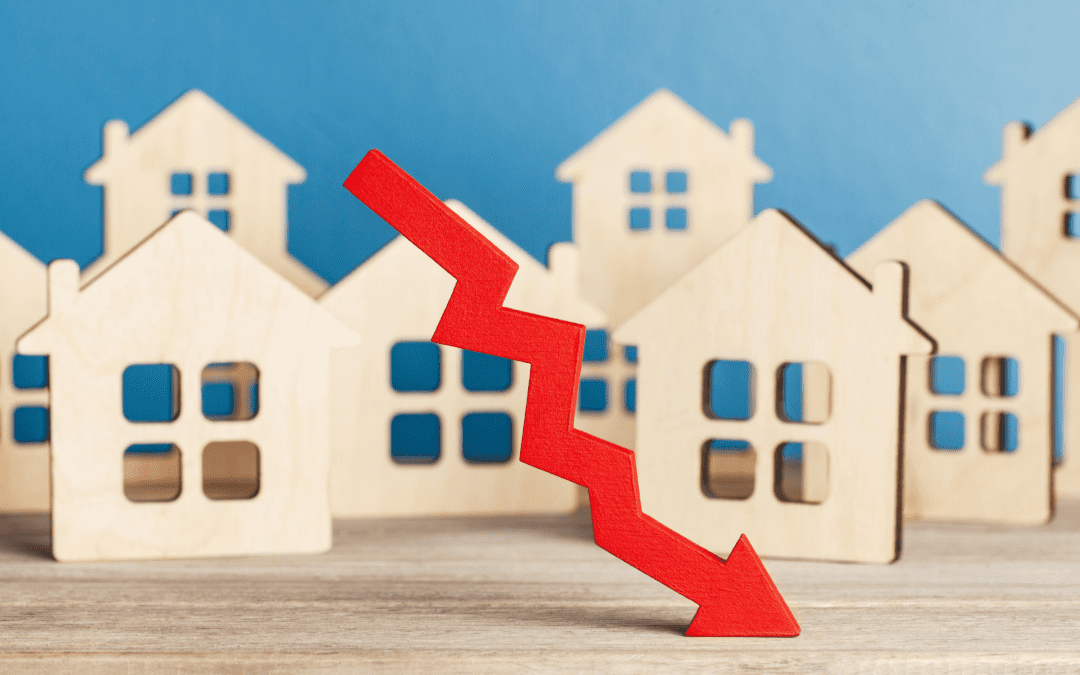
Selling a property in a flat or falling market requires a more considered approach to pricing. When buyer demand slows and properties take longer to sell, setting an unrealistic asking price can result in fewer enquiries, prolonged marketing periods and eventual price reductions.
For homeowners considering selling in Stroud, understanding local conditions is particularly important. Parkers Stroud can provide local valuation guidance, while property market insights in Stroud can help sellers understand buyer expectations, competing properties and recent transaction prices.
The objective is not simply to achieve the highest possible asking price. It is to establish a realistic figure that attracts serious buyers while protecting the value of your investment.
Understanding a Flat or Falling Property Market
A flat property market generally describes a period when house prices remain relatively stable, with little significant growth. A falling market occurs when property values begin to decline.
Both conditions can influence buyer behaviour.
Buyers may become more cautious, take longer to make decisions and negotiate more firmly. Meanwhile, sellers may face increased competition from other properties available in their area.
Recognising these conditions early can help you establish an appropriate pricing strategy rather than relying on expectations formed during a stronger market.
Researching Recent Local Property Sales
One of the most reliable ways to establish an asking price is to examine recently sold properties in your neighbourhood.
Look for homes with similar characteristics, including:
- Property type and size.
- Number of bedrooms and bathrooms.
- Garden and parking facilities.
- Overall condition.
- Location and nearby amenities.
Recent transactions provide a more realistic indication of buyer behaviour than historical valuations.
Ideally, prioritise sales completed within the last three to six months, particularly when the market is changing quickly.
Looking Beyond Asking Prices to Actual Sold Prices
An advertised asking price does not necessarily represent what a property will achieve.
A property listed at £350,000 might eventually sell for £330,000 following negotiations. Another similar property could achieve its original asking price because of stronger presentation or greater buyer demand.
This distinction matters.
Review completed transactions and consider the difference between initial asking prices and final selling prices. Doing so can help prevent unrealistic expectations and establish a more defensible valuation.
Understanding Your Property’s Unique Selling Points
Even in a subdued market, certain property features can attract considerable interest.
These might include:
- A recently renovated kitchen or bathroom.
- Off-street parking.
- A south-facing garden.
- Good transport connections.
- Energy-efficient improvements.
- Additional living or working space.
Identify the features that genuinely distinguish your property from competing listings.
However, avoid assuming that personal improvements automatically translate into an equivalent increase in market value. Buyers ultimately determine what they are prepared to pay.
Avoiding the Temptation to Overprice
Overpricing is one of the most common mistakes sellers make in a challenging market.
An ambitious asking price may initially seem like a sensible negotiating tactic. However, it can discourage potential buyers from arranging viewings.
Properties that remain available for extended periods may also develop a perception of being overpriced or having underlying problems.
A realistic initial price can generate stronger interest, encourage competition and potentially lead to better offers.
It is often more effective to attract serious buyers early than to rely on repeated reductions later.
Considering Buyer Affordability and Mortgage Conditions
Buyer affordability has a direct influence on property demand.
Mortgage interest rates, lending criteria, deposit requirements and household incomes all affect how much prospective purchasers can spend.
For example, a buyer who could previously afford a £350,000 property may have a lower purchasing budget if mortgage repayments increase.
Sellers should therefore consider the financial circumstances of their likely buyer audience when setting an asking price.
A property priced within a popular affordability bracket may attract a wider pool of prospective purchasers.
Making Your Property Stand Out Against Competing Listings
When buyers have more choice, presentation becomes particularly important.
Review competing properties in your area and assess how your home compares in terms of price, condition, photography and available features.
Simple improvements can help strengthen its appeal:
- Declutter living areas.
- Refresh tired decoration.
- Improve kerb appeal.
- Address minor maintenance issues.
- Use professional property photography.
- Ensure the property description highlights its strongest features.
The aim is to give buyers a compelling reason to arrange a viewing.
Knowing When to Review and Adjust Your Asking Price
Pricing should not be treated as a one-off decision.
Monitor viewing enquiries, feedback and the number of offers received during the initial marketing period.
If interest remains limited, investigate why. The issue may relate to presentation, marketing reach or pricing.
A meaningful adjustment, supported by local market evidence, can help attract a different group of buyers.
Avoid making several small reductions without a clear strategy. Each change should have a purpose.
Working with a Local Estate Agent
Local market knowledge can be particularly valuable when property prices are stagnant or declining.
An experienced estate agent can assess comparable transactions, understand neighbourhood demand and provide an informed valuation.
They can also advise on:
- Appropriate asking-price positioning.
- Likely buyer demographics.
- Competing properties.
- Marketing strategies.
- Negotiating offers.
A valuation should reflect current market conditions rather than simply the seller’s preferred figure.
Preparing Your Home to Justify Its Asking Price
Buyers expect the asking price to reflect the property’s condition and overall presentation.
Before marketing, address visible defects, ensure essential installations are functioning and organise relevant property documentation.
Consider obtaining an Energy Performance Certificate (EPC) if one is required and does not already exist.
A well-presented property with clear documentation can help reassure buyers and support negotiations.
Conclusion: Finding the Right Price to Attract Serious Buyers
Pricing a home correctly in a flat or falling market requires realistic expectations, careful research and an understanding of buyer behaviour.
Recent sold prices, competing listings, mortgage affordability and your property’s condition should all influence the final asking price.
Rather than aiming for an ambitious figure and hoping for the best, focus on positioning your property competitively from the outset.
A well-considered valuation, supported by local expertise and effective marketing, can help attract serious buyers and improve your chances of securing a successful sale, even when market conditions are challenging.