

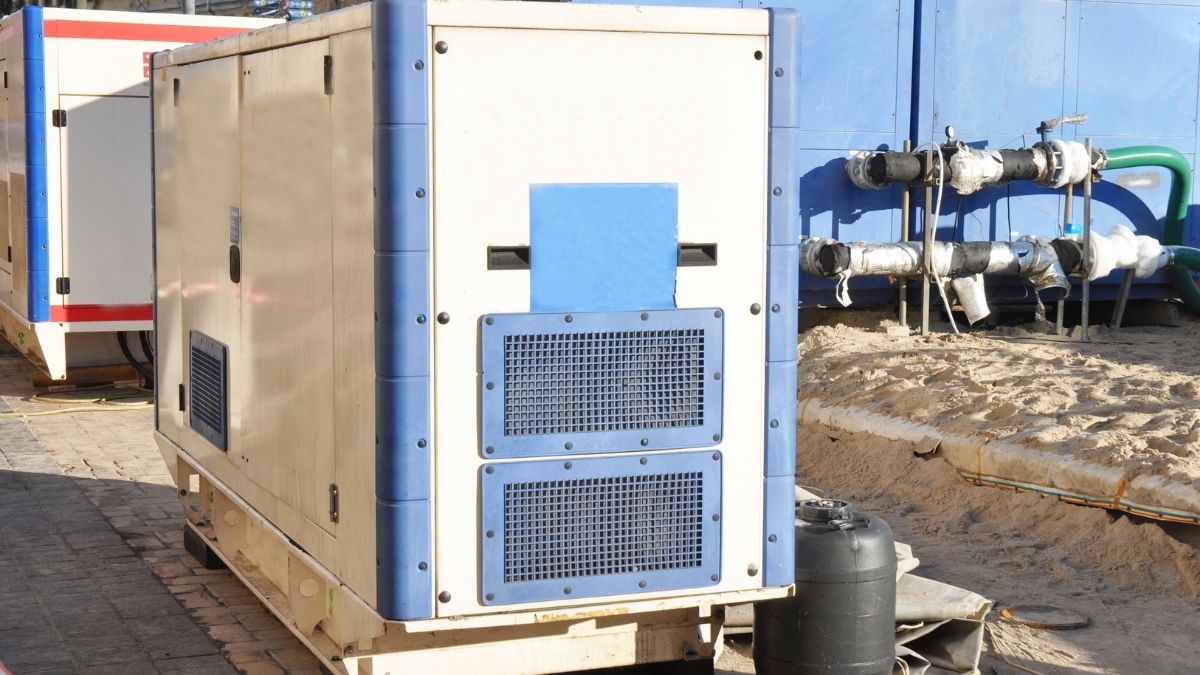
Construction projects rarely run in perfect conditions from day one. Before permanent electrical infrastructure is live, or when additional capacity is needed, temporary site power is critical to keep things moving safely and reliably. For project managers overseeing large sites, understanding how temporary power works—and how to plan it—can make the real difference between smooth operations and costly delays.
This guide explains:
- What temporary site power is and when you need it
- Key design and deployment considerations
- Compliance, safety, and regulatory best practice
- Common challenges and mitigation strategies
- How to choose a trusted temporary power provider
What Is Temporary Site Power — and Why It Matters
“Temporary site power” refers to a provisional electrical supply setup used during construction phases, often before the permanent mains connection is established or when extra capacity is required (e.g. for tower cranes, welfare units, lighting, tools, etc.).
On large sites, the stakes are higher:
- Multiple work zones, each needing power
- Heavy loads (cranes, welders, HVAC, dewatering)
- Long cable runs and voltage drop concerns
- Redundancy needs to avoid downtime
If temporary power is under‑specified or poorly managed, you risk lost productivity, safety incidents, or increased costs.
Planning Temporary Power: Key Design Considerations
Below are vital factors a project manager should evaluate early in the planning phase:
1. Load Assessment & Diversity
- Calculate the total connected load (kW) — include all portable tools, machinery, site welfare, lighting, etc.
- Apply diversity factors (not all equipment runs simultaneously)
- Identify peak loads (cranes, compressors) and continuous loads
- Factor in growth and potential future expansions
2. Voltage Drop & Cable Sizing
- On large sites, long cable runs can lead to voltage drop, affecting equipment performance.
- Use correct conductor sizes and ensure low-loss cabling over distance
- Consider parallel runs or higher voltage distribution to reduce losses
3. Distribution Layout & Zoning
- Divide the site into zones and use distribution boards / sub‑panels to shorten cable spans
- Use ring mains where feasible
- Plan for emergency isolation points
4. Generator Backup / Redundancy
- For critical operations, provide generator backup or parallel generator sets
- Design for automatic switching or seamless transfer to avoid interruption
5. Earthing, Bonding & Protection
- Ensure proper earthing and bonding to prevent electric shock hazards
- Use RCDs, MCBs, surge protection devices (SPDs)
- Include protection for overcurrent, earth fault and residual current
6. Fuel, Ventilation & Noise
- Generators need proper ventilation and fuel management
- Plan safe fuel delivery and storage (bunded containers, refuelling scheduling)
- Mitigate noise (acoustic enclosures, distance to sensitive areas)
7. Monitoring & Controls
- Remote monitoring of generator performance, load balance, fuel levels
- Use control systems (SCADA-style) to detect anomalies and forecast maintenance
Compliance, Safety & Regulation
Project managers must stay compliant with UK regulations and industry best practices:
- The Health & Safety Executive (HSE) sets general electrical safety expectations on construction sites — see Electrical safety on construction sites guidance.
- Follow BS 7671 (IET Wiring Regulations) for safe wiring and installation practices
- The Construction (Design & Management) Regulations (CDM) place responsibility on designers and contractors to plan for safe temporary works
- Use competent electrical contractors and ensure regular inspection & testing (PAT, earth tests, inspection regimes)
- Keep comprehensive “power records” (load schedules, site drawings, testing logs)
Challenges & How to Mitigate Them
| Challenge | Risk/Impact | Best Practice / Mitigation |
| Unexpected load growth | Circuit overloads or generator trips | Build in margin (e.g. 20–30%) and modular expansion capability |
| Voltage drop over long cables | Equipment underperformance or nuisance trips | Use larger conductors, reroute, or use higher voltage intermediate distribution |
| Fuel or generator failure | Unplanned downtime | Use dual/failover generators and schedule preventive maintenance |
| Site changes mid‑project | Distribution layout becomes obsolete | Keep routing flexible with temporary ducts, cable trays, and spare capacity |
| Noise, fumes, environmental impact | Neighbour complaints or regulatory breach | Use acoustic enclosures, distance from sensitive receptors, and emissions control |
Choosing a Reliable Temporary Power Supplier
When selecting a supplier or contractor, look for:
- Experience with large-scale construction sites
They understand the complexity and constraints of multi‑zone distribution. - Turnkey capability — design, installation, commissioning, monitoring, maintenance.
- Safety credentials and accreditations — e.g. NICEIC, ECA, ISO 9001, ISO 45001.
- Clean & Green ethos — low-emission generator options, bio‑diesel, efficient systems.
- Rapid response & logistics — ability to move gensets, cabling, switchgear quickly.
- Transparent reporting & monitoring — remote visibility, fuel usage data, load trends.
At Templec, we specialise in designing, deploying and maintaining temporary site power packages tailored to large construction projects. (Add internal link: e.g. our Temporary Site Power service).
Internal & External Linking Suggestions
- Link internally to your Temporary Power or Site Services page (e.g. “Explore our Temporary Site Power packages”)
- Where relevant, link to case studies of large construction jobs you’ve supported
- Externally, link to authoritative sources (HSE, IET, BS 7671 guidance)
FAQ (for SEO & Linkability)
Q1: When should temporary site power be deployed?
Typically before the permanent mains connection is available and after mobilising site infrastructure. It’s often one of the first services delivered on a new construction site.
Q2: What size generator do I need?
That depends on your total anticipated load, diversity factor, and peak demand. Always work with a specialist to assess your specific project’s requirements.
Q3: Can temporary power solutions be “green” or low emissions?
Yes — modern gensets can run on bio-diesel, use emissions control systems, or hybrid setups (generator + battery) to reduce carbon output and fuel consumption.
Q4: How long should temporary power remain in place?
Until the permanent infrastructure is commissioned and verified. For some projects, temporary supply might be required for months or even years.
Q5: How do I ensure safety and compliance?
Use competent electrical contractors, adhere to BS 7671 and CDM obligations, schedule regular testing (PAT, earth, insulation), and maintain full documentation.
Call to Action
Temporary power may seem like a “behind-the-scenes” service, but it’s a cornerstone of successful project delivery. If you’re planning a large-scale site and need reliable, safe, and scalable temporary power, get in touch with Templec today. We’ll help you plan your load, design your distribution system, and deliver turnkey deployment—with ongoing support and monitoring.
 TomEditor